
Below Grade Waterproofing Systems in Los Angeles
Key Takeaways
- Below grade waterproofing prevents water infiltration into basements, underground garages, planters, and any structural element below the ground surface
- Los Angeles has pockets of shallow groundwater reaching as high as 10 feet below grade, making hydrostatic pressure waterproofing a structural requirement in those areas
- The three primary below-grade methods are post-applied (retaining walls), blindside (shoring walls), and positive-side membrane systems — each suited to different foundation and excavation conditions
- In LADBS methane zones, waterproofing membranes must also serve as gas barriers, meeting dual specifications for both moisture resistance and methane vapor diffusion reduction
- According to the International Code Council (ICC), waterproofing failures account for over 80% of all below-grade structural complaints in commercial construction (ICC, 2023)


What Is Below Grade Waterproofing?
Below grade waterproofing is the application of moisture barrier systems to any building component located beneath the ground surface — foundation walls, basement slabs, underground parking structures, elevator pits, planters, and utility tunnels. These systems prevent groundwater, rainwater runoff, and soil moisture from penetrating the building envelope and causing structural damage, mold growth, or occupant safety hazards.
In Los Angeles, below-grade waterproofing carries additional weight because many properties sit within LADBS methane zones where the waterproofing membrane also functions as a gas barrier. A single membrane system that fails to meet both moisture and methane specifications triggers plan check rejection from LADBS and potential DTSC enforcement if volatile contaminants are present.
The American Society of Civil Engineers (ASCE) reports that water damage is the leading cause of premature concrete deterioration in below-grade structures, reducing service life by 30–50% when left unaddressed (ASCE Infrastructure Report, 2024). Proper waterproofing during new construction costs a fraction of retrofit repairs — which typically run 5–10 times more than the original installation.
Sway Features designs and installs below-grade waterproofing systems across Los Angeles, working with architects, engineers, and general contractors to specify the right membrane system for each project.
What Is Below Grade Waterproofing?
Below grade waterproofing is the application of moisture barrier systems to any building component located beneath the ground surface — foundation walls, basement slabs, underground parking structures, elevator pits, planters, and utility tunnels. These systems prevent groundwater, rainwater runoff, and soil moisture from penetrating the building envelope and causing structural damage, mold growth, or occupant safety hazards.
In Los Angeles, below-grade waterproofing carries additional weight because many properties sit within LADBS methane zones where the waterproofing membrane also functions as a gas barrier. A single membrane system that fails to meet both moisture and methane specifications triggers plan check rejection from LADBS and potential DTSC enforcement if volatile contaminants are present.
The American Society of Civil Engineers (ASCE) reports that water damage is the leading cause of premature concrete deterioration in below-grade structures, reducing service life by 30–50% when left unaddressed (ASCE Infrastructure Report, 2024). Proper waterproofing during new construction costs a fraction of retrofit repairs — which typically run 5–10 times more than the original installation.
Sway Features designs and installs below-grade waterproofing systems across Los Angeles, working with architects, engineers, and general contractors to specify the right membrane system for each project.
Types of Below Grade Waterproofing Systems
Post-Applied Waterproofing (Retaining Walls)
Post-applied waterproofing is installed on the exterior face of a retaining wall or foundation wall after the concrete has been poured and cured. The membrane adheres directly to the concrete surface, creating a continuous moisture barrier before backfill covers the wall.
This is the most common below-grade waterproofing method for projects where the retaining wall is accessible from the exterior — meaning excavation occurs first, the wall is poured, and the waterproofing is applied before soil is placed back against the wall.
For post-applied retaining wall waterproofing to perform correctly, surface preparation is critical. The concrete must be clean, dry, and free of form oil, curing compounds, and honeycombing. Protruding tie-hole cones must be removed and patched flush. Block walls require special attention at mortar joints, where the different absorption rates between block and mortar create weak points in the membrane bond.
Below-grade waterproofing must terminate at grade level using a termination bar — a metal strip mechanically fastened to the wall that seals the top edge of the membrane and prevents dirt, debris, and surface water from getting behind the system. Self-terminating membrane products exist, but termination bar details are preferred for long-term reliability.
A drainage layer — typically a dimpled HDPE drain board or geocomposite drainage mat — installs over the membrane before backfill. This drainage layer relieves hydrostatic pressure against the membrane by channeling groundwater downward to a perforated drain pipe (French drain) at the base of the wall. Without drainage, hydrostatic pressure builds against the membrane and will eventually find or create a path through.
Common post-applied materials include spray-applied rubberized asphalt, peel-and-stick modified bitumen sheets, fluid-applied polyurethane, and bentonite clay panels. Each has specific advantages:
- Spray-applied rubberized asphalt: Monolithic application (no seams), self-healing properties, bonds directly to concrete. Requires certified applicators and warm/dry weather conditions.
- Peel-and-stick sheets: Lower material cost, prefabricated with controlled thickness, no cure time needed. Seam integrity depends on installation skill — laps must be properly rolled and sealed.
- Fluid-applied polyurethane: High elongation for crack-bridging, good chemical resistance, bonds well to irregular surfaces. More expensive per square foot than asphalt-based systems.
- Bentonite clay panels: Self-sealing when hydrated (swells on contact with water to fill gaps), effective in high-water-table conditions. Requires protection from premature hydration during installation.
According to waterproofing industry data from the National Roofing Contractors Association (NRCA), spray-applied systems account for approximately 45% of commercial below-grade installations in the western United States, with peel-and-stick sheets at 30%, fluid-applied at 15%, and bentonite at 10% (NRCA, 2024).
Blindside Waterproofing (Shoring Walls)
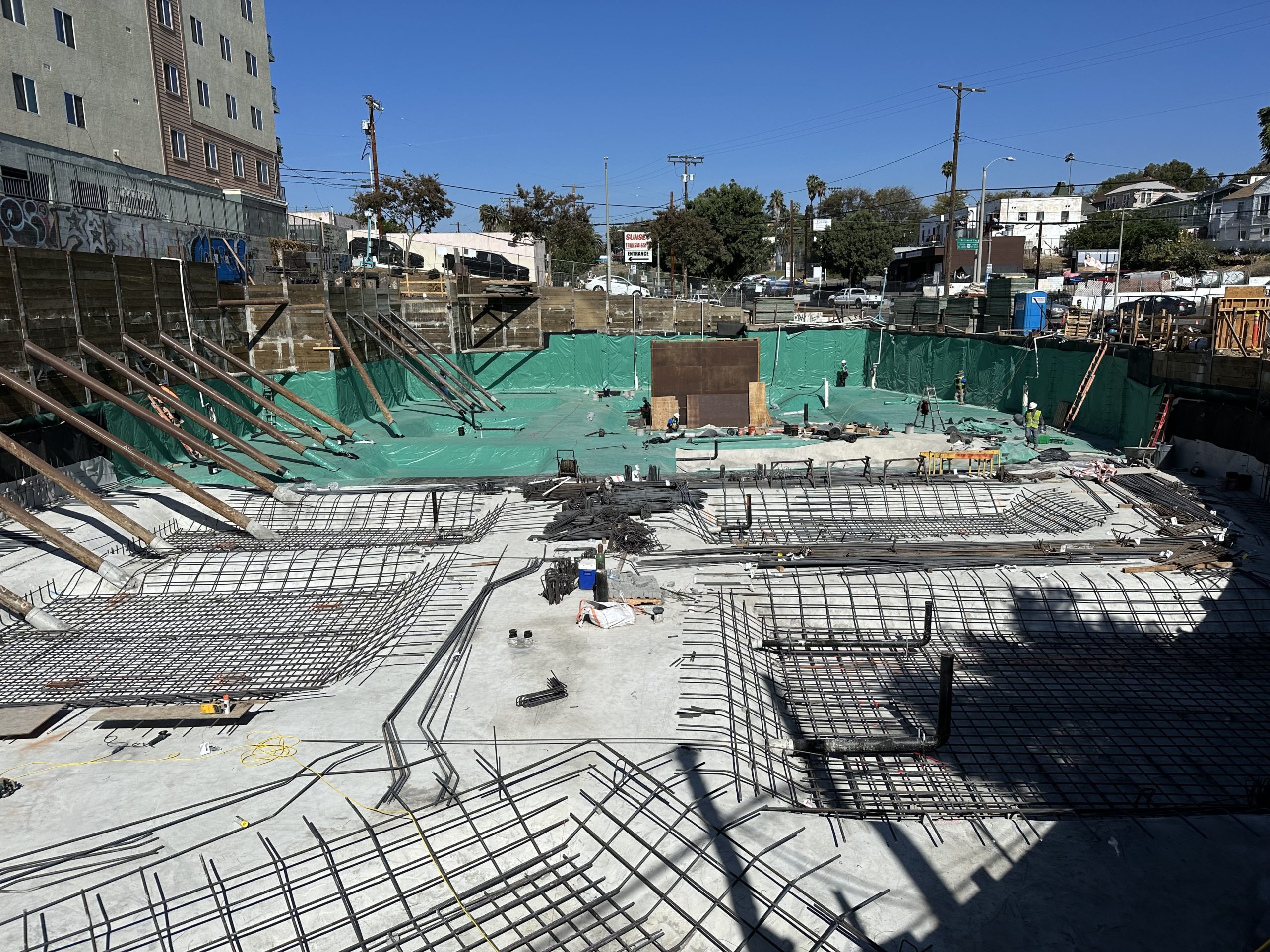
Blindside shoring wall waterproofing is used when the excavation method requires the waterproofing membrane to be installed before the structural wall is poured. This occurs on shored excavations — projects where soldier pile and lagging, sheet piling, or secant pile walls support the earth during excavation and become the permanent retaining structure.
In blindside applications, the waterproofing membrane is applied to the face of the lagging (wood planks between the soldier piles) or shoring wall. Structural concrete — either poured-in-place or shotcrete — is then placed against the membrane, sandwiching it between the shoring and the permanent wall.
This reversal of the normal sequence creates unique challenges. The membrane must bond to rough lagging surfaces (not smooth concrete), it must survive the force and vibration of concrete placement or shotcrete application, and it becomes permanently inaccessible after the structural wall is poured. Any defect sealed behind the wall stays there — repair requires removal of the structural concrete.
Blindside waterproofing materials must be specifically rated for this application. Standard post-applied membranes are not interchangeable. Common blindside products include pre-applied sheet membranes with adhesive backing (designed to bond to wet concrete as it’s poured against them), spray-applied bentonite/rubber hybrid systems, and HDPE sheet membranes with mechanical attachment.
In Los Angeles, many commercial projects with underground parking use soldier pile and lagging shoring, making blindside waterproofing one of the most frequently specified below-grade systems. The cost of blindside waterproofing runs 20–40% higher than equivalent post-applied systems due to the specialized materials and the added care required during concrete placement.
Areas of Los Angeles with high groundwater tables — parts of Playa Vista, Marina del Rey, and sections of the Westside — commonly require the “boat design” approach for subterranean structures. The geotechnical engineer specifies a mat slab foundation heavy enough to resist hydrostatic uplift pressure, and the waterproofing system must withstand continuous hydrostatic head pressure against the walls and slab. In these conditions, hot-seam-welded HDPE membranes with reinforced seams are preferred over adhesive-based products.
Positive-Side (Exterior) Slab Waterproofing
Below-grade slab waterproofing — applied beneath the concrete floor slab — prevents moisture from migrating upward through the concrete by capillary action or hydrostatic pressure. The membrane sits between the prepared sub-grade (compacted soil or gravel) and the structural slab.
For projects in LADBS methane zones, the sub-slab membrane performs double duty: waterproofing the slab from below while also serving as the methane gas barrier required by the methane mitigation design. The membrane specification must meet both waterproofing permeance standards and methane diffusion resistance requirements — not all products satisfy both. The material differences between waterproofing and methane vapor barriers are a common source of specification errors.
Sub-slab waterproofing is typically a sheet membrane (HDPE or modified bitumen) installed over the gravel base, with all seams heat-welded or taped per manufacturer specifications. In methane zone projects, a smoke test verifies membrane integrity before the concrete pour — the same smoke test used for vapor barrier verification in vapor intrusion mitigation installations.
Waterproofing in Los Angeles Methane Zones
Projects in LADBS methane zones face a dual requirement: the below-grade waterproofing system must also function as a methane gas barrier. This means the membrane material, seaming method, and penetration sealing details must satisfy both waterproofing performance standards and LADBS methane mitigation specifications.
Not every waterproofing product qualifies as a methane barrier. LADBS requires that gas barrier membranes carry a current LARR (Los Angeles Research Report) approval or equivalent third-party certification documenting methane diffusion resistance. A waterproofing product tested only for moisture resistance will be rejected during plan check if the project is in a methane zone.
The practical impact: when specifying below-grade waterproofing for a methane zone project, the design engineer must select a product that appears on both the waterproofing approved materials list and the methane barrier approved materials list. This narrows the available product options and sometimes eliminates lower-cost materials that work for waterproofing alone but lack gas barrier certification.
For projects requiring methane soil gas testing and mitigation, early coordination between the waterproofing consultant and the methane mitigation designer prevents conflicting specifications. A waterproofing membrane installed without methane barrier certification may need to be removed and replaced — a costly and schedule-destroying outcome that proper upfront coordination avoids entirely.
Hydrostatic Pressure Waterproofing
Hydrostatic pressure waterproofing addresses the specific challenge of groundwater exerting continuous force against below-grade walls and slabs. When a building extends below the water table, the surrounding groundwater pushes against the structure — and any weakness in the waterproofing system becomes a leak under positive pressure.
Standard waterproofing systems designed for soil moisture resistance may not withstand sustained hydrostatic head pressure. Hydrostatic-rated systems use thicker membranes, reinforced seam details, and integrated drainage components to manage water pressure rather than just block dampness.
In Los Angeles, the historically highest groundwater levels in parts of the Westside, South Bay, and portions of the San Fernando Valley reach as shallow as 10 feet below the existing grade. Any subterranean structure extending into these zones — underground parking, basements, mechanical rooms — requires hydrostatic-rated waterproofing specified by the geotechnical engineer.
The drainage system working alongside the membrane is equally important. Perforated pipe at the base of foundation walls, gravel drainage blankets beneath slabs, and sump pump systems all work to reduce the effective hydrostatic pressure against the membrane. A properly designed drainage system extends the service life of the waterproofing membrane by reducing the continuous pressure load it must resist.
Material Selection for Below Grade Systems
Choosing the right waterproofing material depends on the application type, soil conditions, groundwater levels, and whether the membrane must also serve as a methane barrier.
| Material | Best For | Cost/SqFt | Seams | Methane Barrier? | LA Acceptance |
|---|---|---|---|---|---|
| Spray-applied rubberized asphalt | Post-applied walls, complex geometry | $3–$8 | None (monolithic) | Some products — verify LARR | LADBS, LA County |
| Peel-and-stick modified bitumen | Post-applied walls, budget projects | $2–$5 | Adhesive laps (weak point) | Varies by manufacturer | LADBS, LA County |
| Fluid-applied polyurethane | Walls with crack-bridging needs | $5–$12 | None (liquid applied) | Limited gas barrier ratings | LADBS |
| HDPE sheet (40-100 mil) | Sub-slab, blindside, high water table | $2–$6 | Heat-welded (strong) | Yes — most products certified | LADBS, DTSC, LA County |
| Bentonite clay panels | High water table, self-healing needed | $4–$10 | Self-sealing when hydrated | No — waterproofing only | LA County |
| Composite (sheet + spray) | High-value commercial, critical facilities | $6–$14 | Spray seals sheet seams | Yes — when both components rated | LADBS, DTSC |
The cost of waterproofing materials for extreme conditions varies significantly based on project size, application method, and material manufacturer. Projects at or below the water table require the highest-performing (and highest-cost) material specifications.
The Bottom Line
Below grade waterproofing protects basements, underground garages, retaining walls, and foundation slabs from water infiltration that causes structural deterioration, mold growth, and tenant complaints. In Los Angeles, many below-grade projects also sit in LADBS methane zones — requiring a single membrane system that resists both moisture and methane gas migration. Post-applied systems serve accessible retaining walls, blindside systems serve shored excavations, and sub-slab membranes protect foundation floors. Material selection must account for soil conditions, groundwater levels, methane zone status, and the specific regulatory body overseeing the project. Getting the specification right during design costs a fraction of what retrofit repairs demand after the building is occupied.
Contact Sway Features at (888) 949-7929 or visit our contact page for below grade waterproofing design and installation in Los Angeles.
Frequently Asked Questions
What is below grade waterproofing?
Below grade waterproofing is the installation of moisture barrier systems on building components located beneath the ground surface — foundation walls, basement slabs, underground parking structures, elevator pits, and planters. These systems prevent groundwater, rainwater, and soil moisture from entering the building, protecting against structural damage, mold, and interior flooding.
How much does below grade waterproofing cost in Los Angeles?
Costs range from $2–$14 per square foot depending on the material type, application method, and site conditions. Post-applied spray systems on retaining walls run $3–$8 per square foot. Blindside shoring wall systems cost 20–40% more than equivalent post-applied installations. Full hydrostatic-rated systems for below-water-table projects can exceed $10–$14 per square foot including drainage components.
Does my waterproofing membrane need to be a methane barrier too?
If your project is in an LADBS methane zone — which you can check using the ZIMAS database — then yes. The below-grade membrane must meet both waterproofing performance standards and LADBS methane gas barrier specifications. The product must carry LARR approval or equivalent certification for gas mitigation use. Not all waterproofing products qualify as methane barriers.
What is the difference between blindside and post-applied waterproofing?
Post-applied waterproofing goes on the exterior face of a retaining wall after concrete is poured — the wall is accessible and the membrane bonds to cured concrete. Blindside waterproofing is installed on shoring (wood lagging or sheet piling) before the structural wall is poured — concrete is placed against the membrane. Blindside is required when the building is constructed inside a shored excavation where the exterior wall face will never be accessible.
How do I know if my site has high groundwater?
Your geotechnical engineer’s soil report includes historically highest groundwater elevation data for the site. In Los Angeles, parts of Playa Vista, Marina del Rey, South Bay, and sections of the San Fernando Valley have recorded groundwater as shallow as 10 feet below grade. If your subterranean structure extends into the groundwater zone, hydrostatic-rated waterproofing is required.
Can waterproofing be added to an existing building?
Yes, but options are limited and costs are high. Interior negative-side coatings and injection systems can treat existing walls from the inside. Exterior repairs require excavation down to the foundation — a major undertaking on occupied properties. Interior treatments cost $8–$25 per square foot; exterior excavation and re-waterproofing costs $15–$50+ per square foot depending on depth and access.
How long does below grade waterproofing last?
Properly installed below-grade waterproofing systems have an expected service life of 25–50+ years depending on material type and site conditions. HDPE sheet membranes and spray-applied rubberized asphalt show the longest documented field performance. Peel-and-stick products may require earlier inspection in aggressive soil chemistry environments.
What causes waterproofing failures?
The three leading failure causes are poor surface preparation before membrane application (30%), inadequate detailing at penetrations, cold joints, and terminations (35%), and drainage system failures that allow hydrostatic pressure to build against the membrane (25%). According to construction defect litigation data from the Construction Defect Journal, waterproofing defects represent the single largest category of below-grade construction claims in California (CDJ, 2024).