Key Takeaways
- Early engagement with a methane mitigation consultant — before architectural design begins — reduces total project cost by 15–25% compared to addressing mitigation late in the design process.
- Design-build delivery (same firm for design and construction) averages 10–15% lower total cost than separate design and construction contracts.
- According to Sway Features’ project comparisons, the five strategies below have a combined potential to reduce total methane mitigation cost by 20–35% without sacrificing quality or compliance.
- The most expensive methane projects are the ones where mitigation is treated as an afterthought — late engagement creates redesign costs, material waste, and schedule delays.
Methane mitigation is a code-mandated cost that cannot be eliminated, but the total amount you spend depends heavily on when and how you approach it. Most budget overruns in methane mitigation projects trace back to a few avoidable decisions — late consultant engagement, design-construction coordination gaps, material specification errors, and poor construction scheduling. Each of these problems adds cost without adding value. Active methane mitigation in Los Angeles requires proactive planning and collaboration among stakeholders to minimize costs effectively. By addressing these issues early in the project lifecycle, teams can reduce the risk of budget overruns and enhance the overall success of their initiatives. Investing in training and tools for proper coordination will lead to better project outcomes and a more sustainable approach to methane management.
This page covers the most effective cost-reduction strategies used by experienced LA developers and architects on methane mitigation projects. The implementation of subterranean methane mitigation strategies is crucial for maintaining environmental integrity while maximizing property values. Experts emphasize the importance of innovative engineering techniques and sustainable practices to address this pressing issue. By investing in these solutions, developers can not only comply with regulations but also contribute to a safer and healthier urban environment. one key aspect of success in these projects is how to assess methane mitigation skills among team members. This evaluation helps ensure that only those with the most knowledge and ability are assigned to critical tasks. Furthermore, leveraging advanced training and certification programs can enhance the expertise required for effective implementation.
Strategy 1: Engage the Methane Consultant During Schematic Design
This is the single most impactful cost-saving action available to any project team. When the methane mitigation designer joins during schematic design, they can influence decisions that directly affect mitigation cost.
Foundation type decisions. Slab-on-grade foundations are significantly cheaper to mitigate than subterranean structures. If the project program allows it, keeping parking above grade instead of below grade can cut methane mitigation costs by 50% or more. The methane consultant can quantify this trade-off before the architect commits to a below-grade design.
Vent riser routing. Vent risers that route through utility chases, stair towers, or elevator shafts cost less to install than risers that require dedicated penetrations. Early coordination with the architect allows the methane engineer to reserve riser locations in the building layout — avoiding expensive field changes during construction.
Penetration minimization. Every pipe, conduit, and structural element that passes through the methane barrier requires a sealed detail. Minimizing the number of slab penetrations directly reduces barrier detailing labor and inspection time. The architect and plumbing engineer can consolidate penetration locations when they know about barrier requirements during schematic design.
According to Sway Features’ project comparisons, early engagement saves $3,000–$15,000 on a typical residential project and $10,000–$40,000+ on commercial projects. The savings come from avoided redesign, reduced field changes, and simpler barrier installation scope.
Strategy 2: Use Design-Build Delivery
When the same firm handles both methane mitigation design and construction, several cost drivers are eliminated.
Coordination gaps disappear. The designer knows exactly how the contractor installs barriers, routes vent risers, and seals penetrations. The drawings reflect actual installation methods — no interpretation required. This eliminates the requests for information (RFIs) that plague projects where design and construction are separated.
Plan-check corrections decrease. Design-build firms know which details LADBS plan checkers focus on, because the same team has been through the approval process repeatedly with the same drawing approach. According to Sway Features’ data, design-build projects achieve first-pass plan-check approval at a rate above 90%, compared to 60% for standard plan submissions.
Change orders are rare. When the designer and contractor are on the same team, design intent translates directly to construction execution. There is no incentive for the contractor to generate change orders for ambiguous design details, because the designer is accountable for buildability.
Cost impact: Design-build delivery saves 10–15% on total methane mitigation cost, primarily through reduced plan-check cycles, elimination of RFIs, and fewer field changes. standard plan benefits for methane projects can further enhance cost efficiencies by streamlining the approval process and standardizing compliance requirements. Implementing these benefits allows for quicker project initiation and limits delays caused by regulatory complexities. As a result, stakeholders are more likely to see accelerated timelines and improved overall project viability.
Strategy 3: Select Barrier Materials Strategically
The two most common barrier types in LA — spray-applied asphalt emulsion and peel-and-stick sheet membrane — have different cost profiles depending on the project.
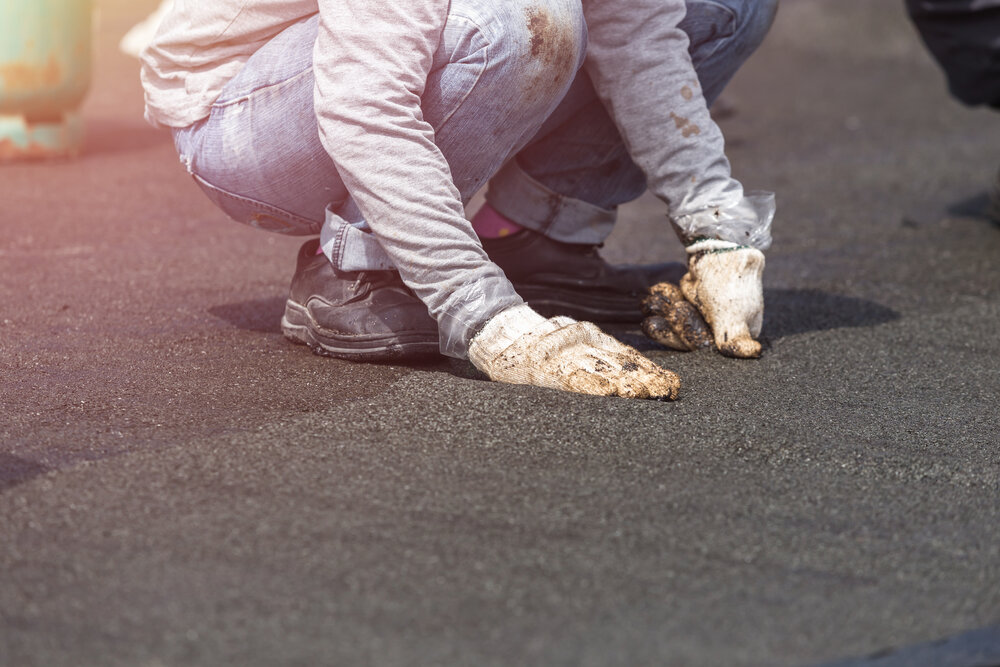
Spray-applied barriers ($3–$7/sq ft) work best for irregular footprints, stepped foundations, and projects with many penetrations. The liquid application conforms to complex geometry without additional seaming labor.
Sheet membranes ($4–$8/sq ft) work best for large, flat, rectangular foundations where fewer seams reduce labor time and inspection risk.
Choosing the wrong barrier type for your project geometry wastes money. According to Sway Features’ installation data, using sheet membrane on a complex foundation with 50+ penetrations costs 20–30% more than spray-applied due to excessive seaming and detailing labor. Using spray-applied on a simple rectangular slab wastes money on setup time that sheet membrane would avoid.
The methane mitigation designer should specify the barrier type based on building geometry, not contractor preference. Ask the designer to justify the material selection with a cost comparison.
Dual-Purpose Products
Some LARR-approved products serve as both methane barrier and waterproofing membrane. Using a dual-purpose product eliminates one material layer and one application cycle, reducing combined barrier-plus-waterproofing costs by 20–30% on the overlapping surfaces. The product must carry separate LARR approvals for both functions — ask the contractor for documentation.
Strategy 4: Schedule Construction Efficiently
Methane mitigation construction has a specific sequence: substrate preparation → barrier installation → deputy inspection → sub-slab vent system → concrete pour. Gaps between these steps waste money.
Deputy inspection scheduling. The deputy inspector charges per day of presence. If the barrier is installed on Thursday but the inspector cannot arrive until the following Tuesday, the project pays for four days of schedule delay. Booking the deputy inspector before barrier installation begins — and confirming availability for the day after installation — eliminates this gap.
Weather delays. Spray-applied barriers require specific temperature and humidity conditions. Scheduling barrier installation during LA’s dry season (April–October) reduces the risk of weather-related delays. According to Sway Features’ construction data, wet-season installations experience 25–35% more weather delays than dry-season installations.
Concrete pour coordination. The concrete pour must happen shortly after the barrier and vent system pass inspection — before the barrier is damaged by foot traffic or UV exposure. Coordinating the concrete contractor’s schedule with the barrier installation schedule avoids the protective covering costs and schedule buffer days that result from poor coordination.
Cost impact: Efficient scheduling saves $1,000–$5,000 on residential projects and $5,000–$15,000 on larger commercial projects — primarily in deputy inspection fees and general conditions costs during delays.
Strategy 5: Avoid Rework by Getting It Right the First Time
Rework is the most expensive outcome in methane mitigation. Failed inspections, plan-check corrections, and construction errors all add cost without advancing the project.
Plan-check corrections. Each correction cycle costs $500–$4,000 in engineering fees plus 2–4 weeks in schedule delays. Custom designs from experienced methane engineers achieve first-pass approval over 90% of the time — compared to 60% for standard plan submissions.
Failed deputy inspections. A failed smoke test requires breach repair and re-inspection, adding $1,000–$3,000 per occurrence. Failed thickness tests require additional barrier application and 12–24 hours of cure time. According to industry data, experienced methane mitigation contractors have failure rates 60% lower than general waterproofing contractors — the premium for certified contractors pays for itself in avoided rework.
Material specification errors. Using non-LARR-approved materials results in mandatory removal and replacement. The removal cost alone often exceeds the installation cost, and the schedule impact can delay the entire project by 2–4 weeks. This error is entirely avoidable with proper material specification in the mitigation design.
Cost-Saving Checklist
Use this checklist to capture available savings on your next methane mitigation project:
- Engage the methane consultant during schematic design — not after design development
- Evaluate design-build delivery before splitting design and construction contracts
- Confirm the barrier type matches your building geometry
- Request dual-purpose barrier products where applicable
- Book the deputy inspector before barrier installation begins
- Schedule barrier work during dry season when possible
- Coordinate concrete pour within 48 hours of inspection approval
- Use a custom PE-stamped design — not LADBS standard plans
- Verify all materials carry current LARR approval before ordering
- Hire certified methane mitigation contractors — not general waterproofing contractors
Summary
The five most effective cost-saving strategies for methane mitigation projects are early consultant engagement (15–25% savings), design-build delivery (10–15% savings), strategic material selection (up to 30% on barrier costs), efficient construction scheduling ($1,000–$15,000 in avoided delays), and rework prevention through quality engineering and certified contractors. Combined, these strategies can reduce total methane mitigation costs by 20–35% without compromising quality or LADBS compliance. The most expensive projects are those where methane mitigation is treated as an afterthought. Effective project planning also involves design engineering for methane reduction to identify innovative solutions that can further enhance savings. Implementing advanced technologies and practices can lead to significant reductions in methane emissions while optimizing overall project efficiency. By focusing on design engineering for methane reduction, stakeholders can ensure a comprehensive approach that integrates cost-effectiveness with environmental responsibility.
Frequently Asked Questions
Is it worth paying more for custom design to save on construction?
Yes. According to Sway Features’ cost analysis, custom designs cost $1,500–$5,000 more upfront than standard plan adaptations but reduce total project cost by 15–25% through fewer corrections, lower RFI rates, and more efficient construction. The upfront design premium pays for itself within the first plan-check cycle.
How do I know if my contractor is certified for methane work?
Ask the contractor for their LADBS methane mitigation contractor certification. Not all general contractors or waterproofing contractors hold this credential. Certified contractors have demonstrated experience with LADBS methane code requirements, barrier installation standards, and deputy inspection protocols. Contact Sway Features for contractor recommendations.
Can I save money by doing testing and design with different firms?
You can, but the cost savings are usually minimal and the coordination risk is real. When the testing firm and design firm are separate, the designer must interpret the test report independently — any misinterpretation can lead to design errors that cost far more than the fee savings. Using the same firm for testing and design eliminates this risk.
What is the single biggest avoidable cost in methane projects?
Plan-check corrections and construction rework. Together, these account for $5,000–$20,000 in avoidable cost on a typical project. Both are preventable with quality engineering, proper material specification, and experienced contractors.
Does project timing affect methane mitigation cost?
Seasonality affects spray-applied barrier installation cost. LA’s rainy season (November–March) creates more weather delays, which extend construction timelines and increase deputy inspection fees. When possible, scheduling barrier installation during the dry season reduces these costs by 25–35%.